This design is part of my 2009 flag proposal series (the flag designs from my old site with the most hits and ratings).
The current design
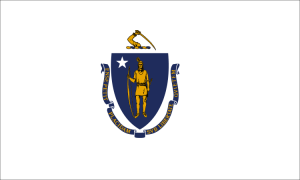
Current flag of Massachusetts
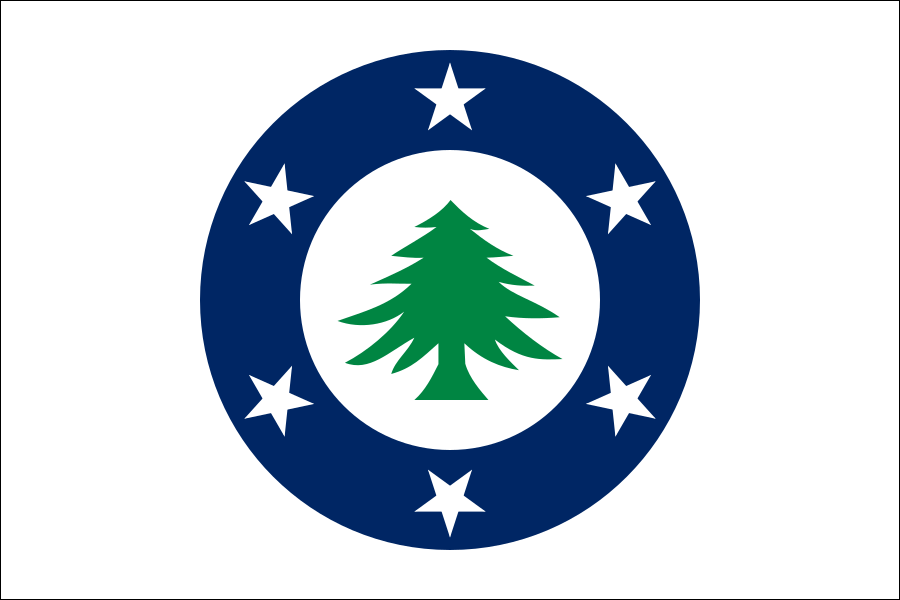
The current flag of Massachusetts is a typical American-style seal-on-a-bedsheet design, and as a result it is convoluted, unmemorable and uninspiring. In 2020, the flag came under intense scrutiny because the design seems to imply colonial violence: There is a sword hanging above a Native American figure, the beginning of the motto translates to “by the sword we seek peace” and the artistic rendering was directly based on figures and artifacts involved with killings of Native Americans. There is ongoing pressure with many groups and towns endorsing a redesign of the flag. As of 2021, the state senate and governor have officially decided to redesign the state seal and flag. Therefore, here is my proposal.
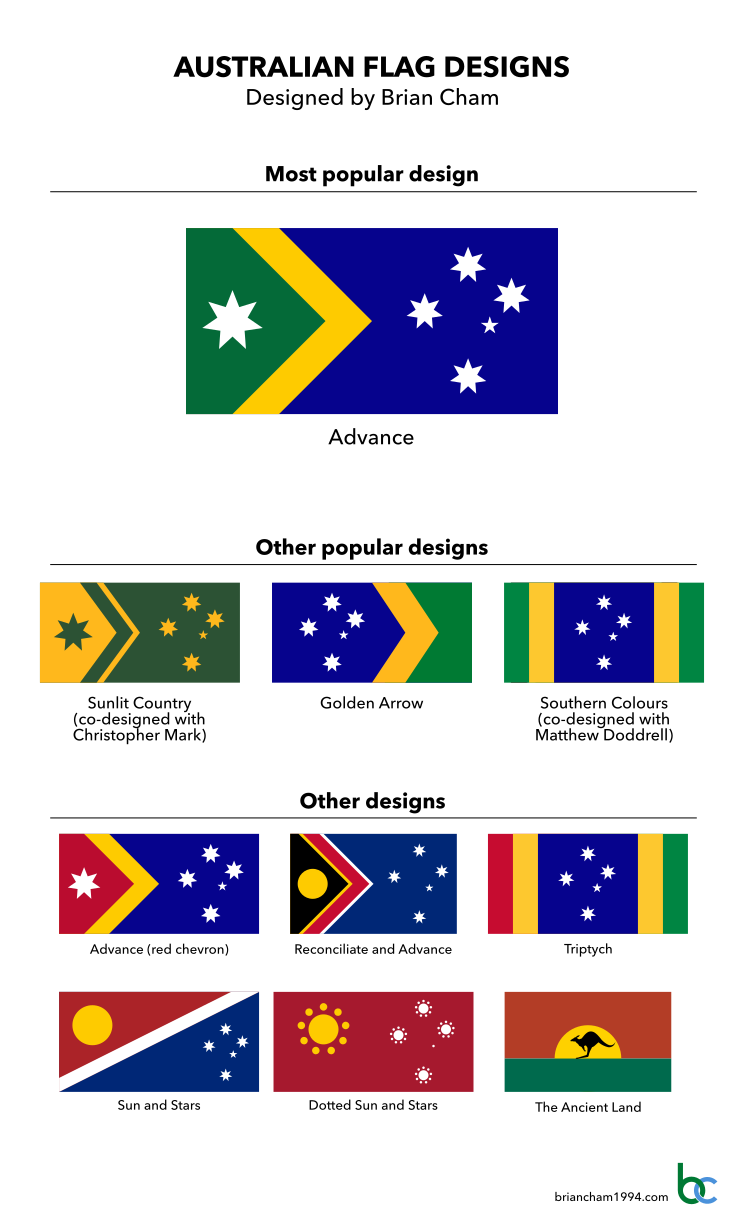
Here are all the Australian flag designs I made (or co-designed) over the years. Australia has not had an official flag competition or referendum yet but I’ll be ready once it happens!
Like all good flags, these designs are simple enough to be remembered by a child and distinct enough to be recognised at a distance. Just as I did for my New Zealand flag proposals, I put in a lot of effort researching and designing these proposals. Instead of making something that looks nice to me personally, I consulted real evidence for what appealed to people and aimed for maximum resonance. The concepts are roughly in order from most to least feasible, based on my research and popularity on Facebook and Reddit.
For a quick summary, the gallery of designs is below. For an extensive read, scroll down and expand each section to see a compilation of our design methodology and details for each flag, including high-resolution graphics, commentary, mock-ups, construction sheets and vector file downloads.
Advance is the most popular design and was voted third best out of all Australian flag redesigns in public polling on the Change the Aussie Flag Facebook group. I will leave it up to the reader to decide which designs resonate the best with them personally.
The reason why a lot of other Australian flag proposals suck is because they didn’t have a proper design methodology. I aimed to transcend this tendency and design the new Australian flag, not a new Australian flag.
Instead of just making something that looks nice and symbolic to me personally, I aimed for maximum feasibility of resonating with the public, based on real evidence and research. In other words, I activated the sympathy part of my brain alongside the aesthetic part.
This research included studying as many existing Australian flag proposals as I could to note common features and feedback, analysing why some designs were more popular than others. I also looked at Australian themed insignia, logos and graphics. Finally, I consulted surveys and campaigns.
For Aotearoa New Zealand, I collated the commentary around existing proposals with a colleague, so that we could uncover the common themes and transcend the common mistakes. Many of these “deal-breakers” apply to Australian flag concepts as well. You can read more about these in the main article The Six Little-Known Deal-Breakers of Bad Flag Design which was presented at NAVA 55 and won their Driver Award. In summary:
Generally bad flag design – Too complicated, too many colours or elements, irrelevant symbolism and so on.
Looks like a logo, not a flag – By far the most common. A flag should actually look like a flag, not a corporate logo stuck into a rectangle.
Cheesy souvenir – Flags relying on informal elements can look like souvenirs.
Mystery symbolism – Roger Ebert once declared, “If you have to ask what it symbolizes, it didn’t.”
Designing for yourself – A lot of designers only included the themes of national identity that appealed to them, not the general public.
Too radical – Making a completely revolutionary design is self-sabotage. A lot of people are intimately attached to established symbolism.
It’s boring, but it works – Trying to satisfy everybody will end up satisfying nobody.
What are the themes of national identity? I identified four of them.
Established symbolism – Elements from the current flag. The red, white and blue colour scheme, the commonwealth star and the southern cross. To some these are familiar and formal but to others these are too safe and boring.
Colloquial symbolism – Elements from local, informal culture. The green and gold colour scheme and the kangaroo. To some these are unique and authentic but to others these are too cheesy and offbeat.
Aboriginal symbolism – Elements from indigenous cultures. The red/ochre, white and black colour scheme, the colour red/ochre by itself, the sun, dotted patterns and the boomerang. To some these are culturally significant but to others these are too sectarian.
Environmental symbolism – Elements from nature. The colour green, landscapes, the sun and the kangaroo. To some these are positive and fresh but to others these are too trendy and informal.
By clarifying these, I can make designs that harmoniously appeal to multiple themes, which will resonate with more people. The “established symbolism” has the most appeal so an effective design will have to focus on this.
The themes are summarised in the Euler diagram below.
The four symbolic themes of Australian graphical identity.
Flag proposals have sometimes competed in head-to-head in ranked competitions or discussions. I used a statistical technique called “regression analysis” to identify which colours and symbols were most associated with success (public resonance). These successful elements were the colours red, white, blue and gold, and the southern cross in its current form (i.e. white on blue).
However, some of these competitions and surveys were from years ago, so the conclusions could be oudated. By today’s standards, the strong preference for red, white and blue is obviously quite conservative. Newer surveys tend to reveal preferences for green and gold instead (see the section below).
A 2016 University of Western Sydney survey asked the Australian public what they wanted in a new flag (Jones, 2016). Results:
The most common requests were “simplicity”, “Southern Cross”, and “Green and Gold”.
Respondents were split between those who wanted recognition of indigenous cultures and those who wanted a culturally neutral design.
When presented with a few examples, respondents preferred designs that were similar to the current flag in layout.
Some have also asked about indigenous viewpoints and consultation. A 1994 survey asked indigenous groups across the country what they wanted in a new flag (Mee, 2018). These were universal responses:
They though the issue was quite pressing.
They did not want the Union Jack.
They wanted it to feature indigenous cultures in some way.
They did not want the Aboriginal flag included in its entirety.
However, opinions varied on how exactly they wanted their cultures to be represented visually.
A 1998 museum exhibition of national flag proposals included some designs featuring indigenous symbols like the Aboriginal colours (black, gold and red), dot patterns, a golden sun and the stripe layout of the Aboriginal flag. These proposals were specifically praised in a speech by Dr. Lowitja O’Donoghue, who at the time was the Chairperson of the Aboriginal and Torres Strait Islander Commission, the highest national indigenous representative body. She made the following comment (O’Donoghue, 1998):
“[Overseas visitors] appreciate the unique aspects of our country including the contribution that Australia’s indigenous people make to our national identity. I’m pleased to see that many of the designs on display here today include a reference to indigenous culture, or the colours of the indigenous flags. But the most important thing is that our new flag should he acceptable to all of us.”
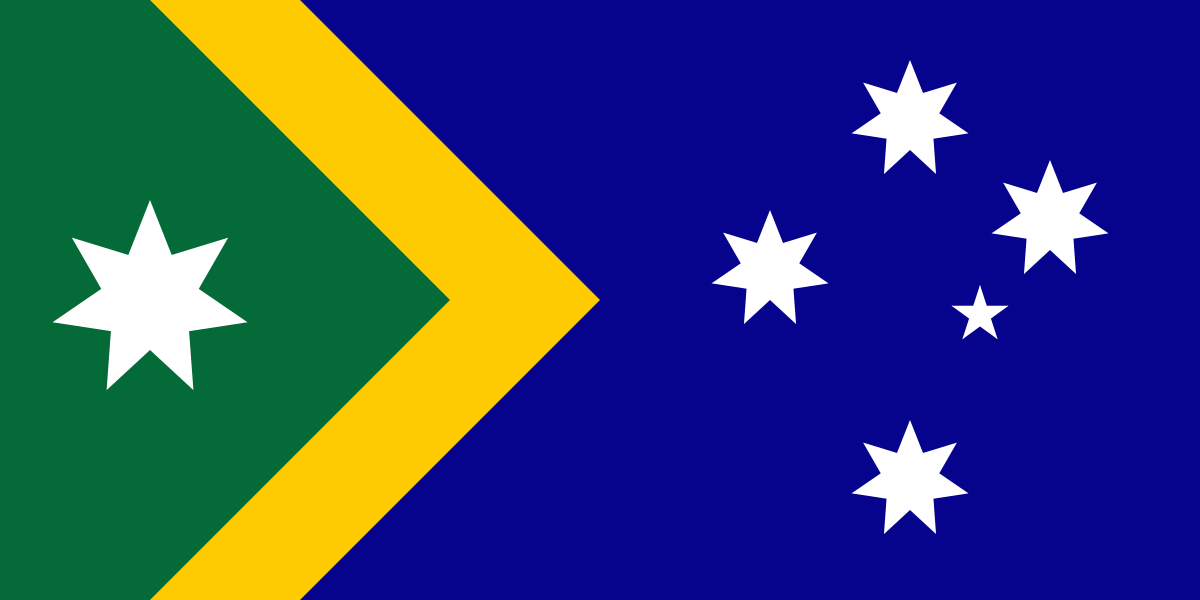
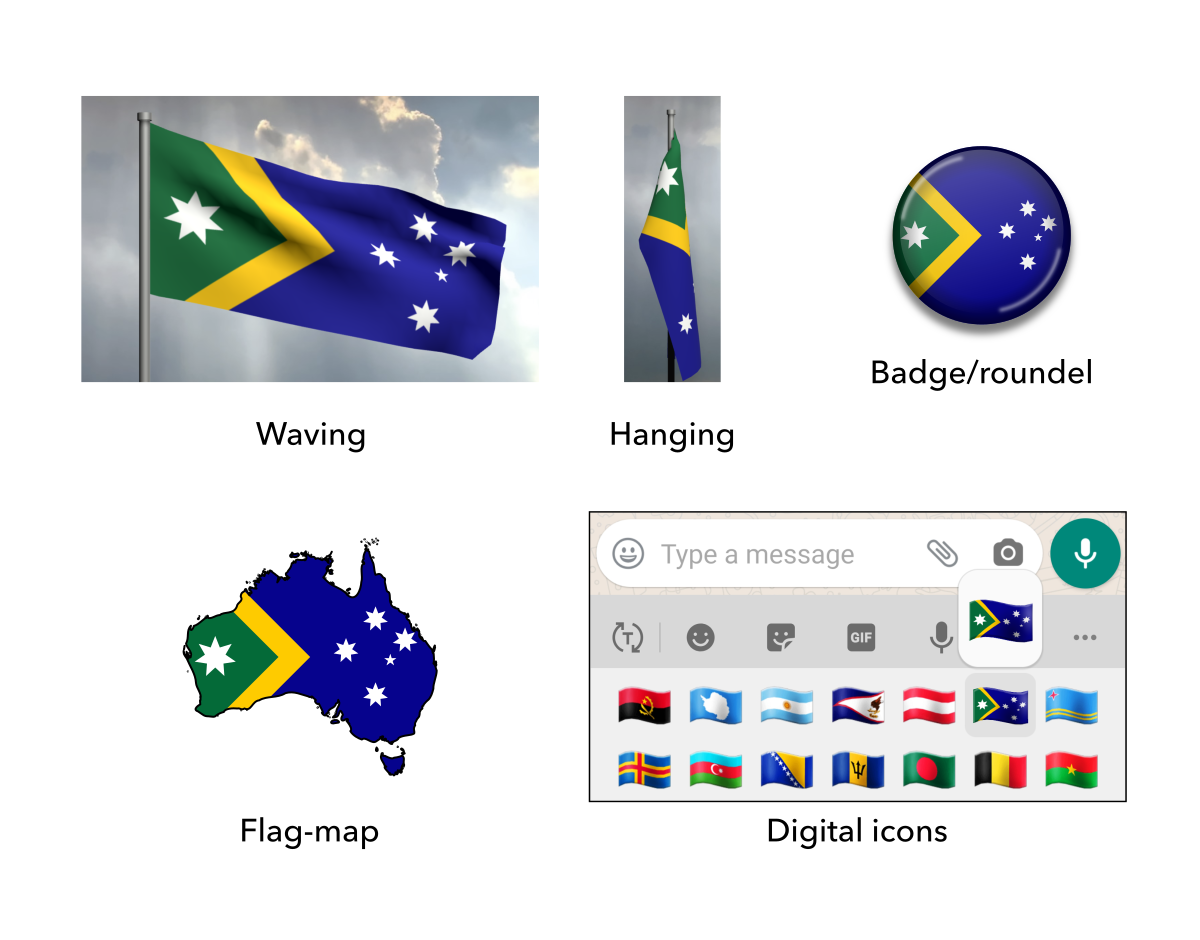
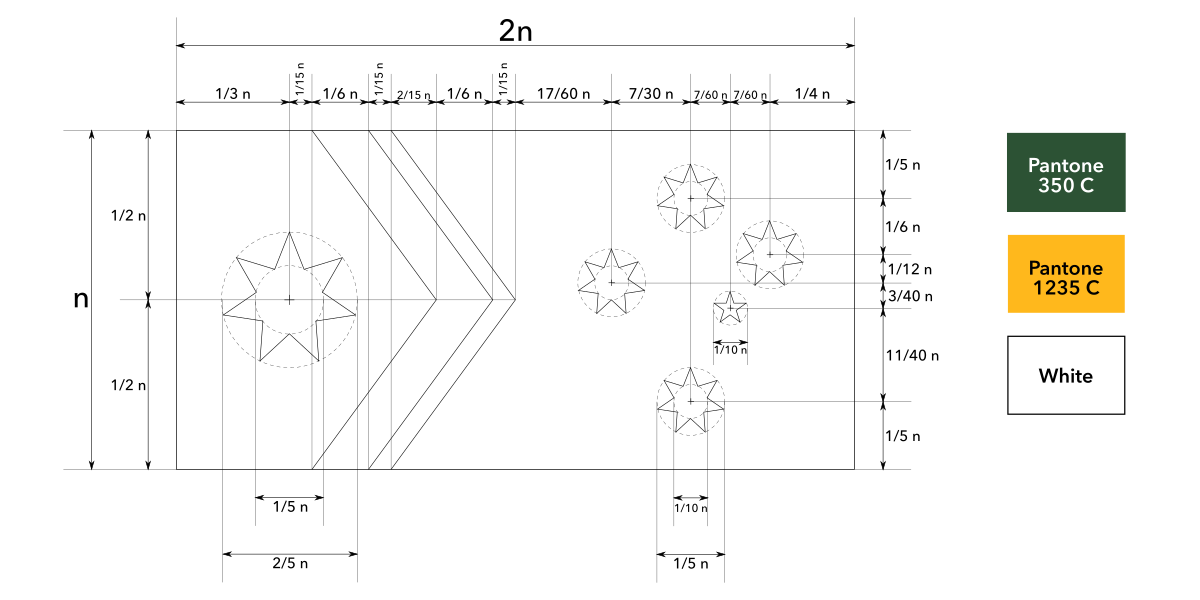
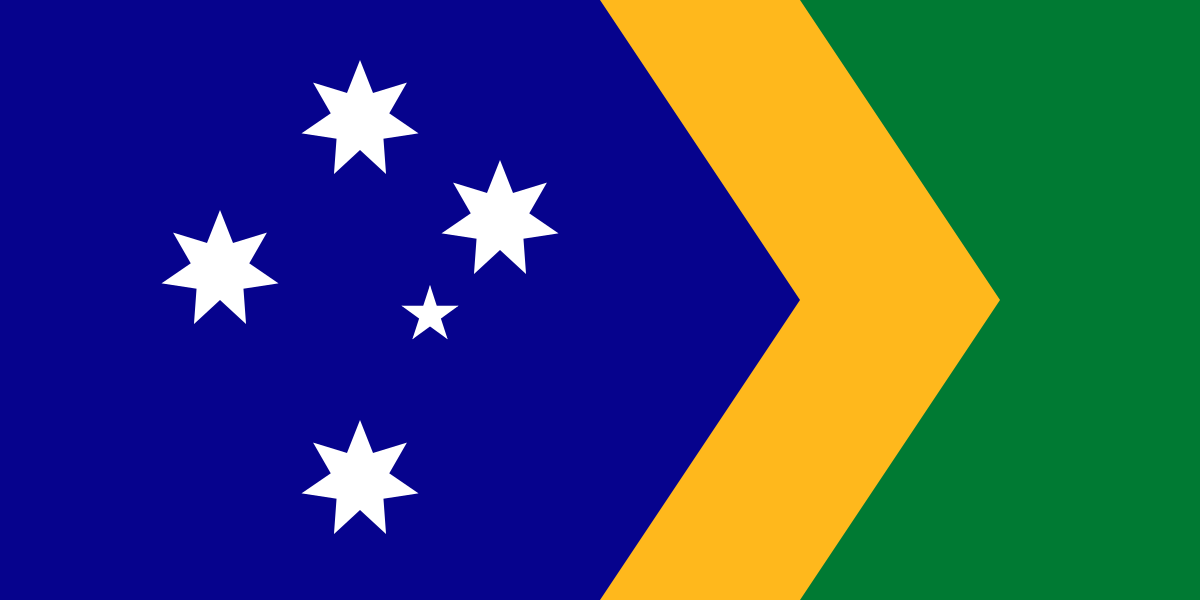
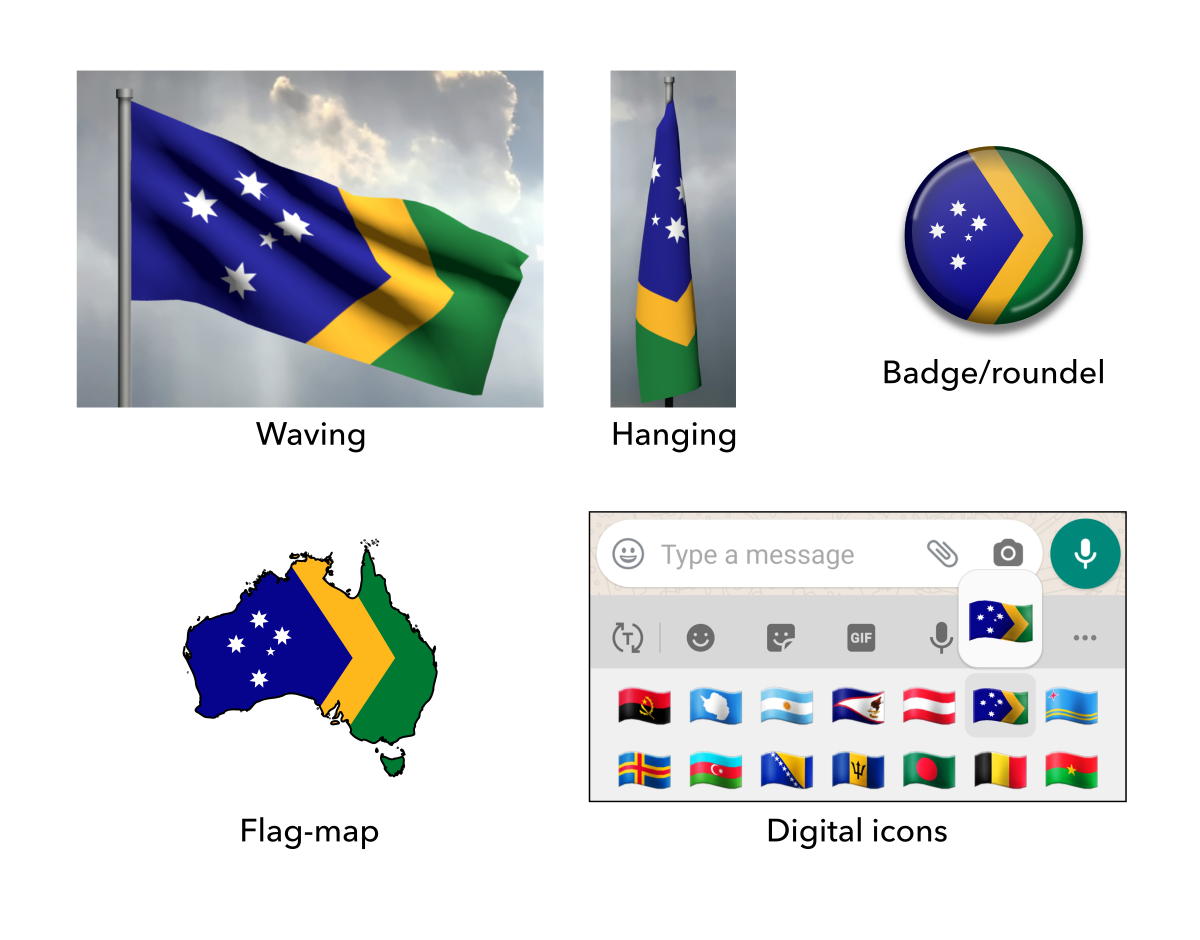
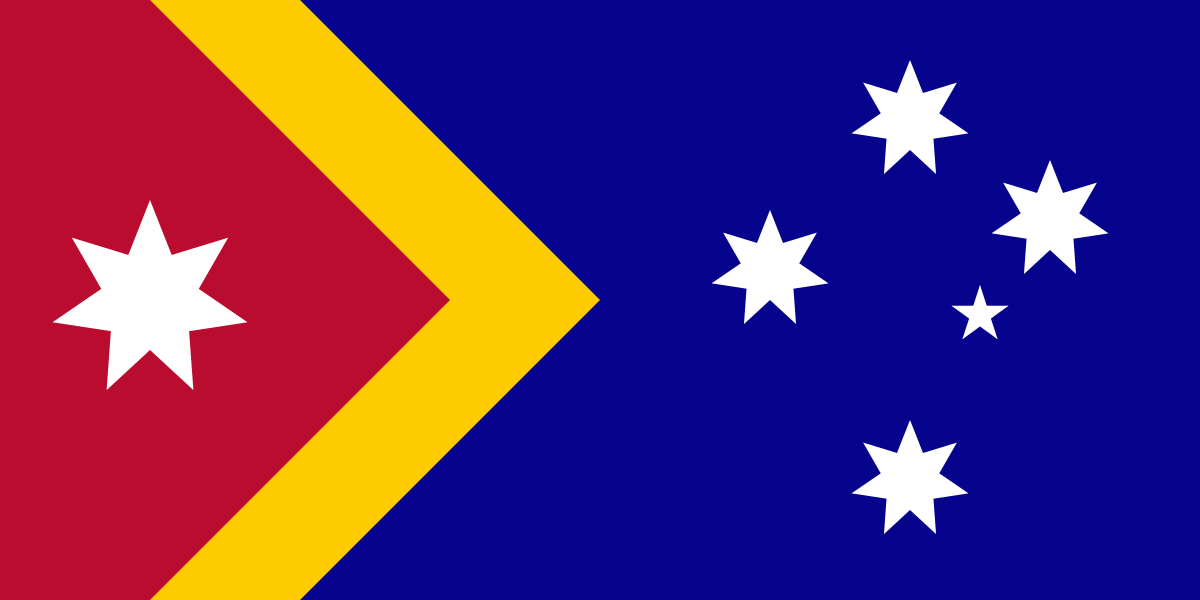
Advance is based on the same layout as the current flag, aiding recognition and establishing continuity. The hoist features a chevron representing unity and advancement, reflecting the country’s motto “Advance Australia”. It also subtly resembles a boomerang, representing the country’s milennia of indigenous history. Within the chevron is the Commonwealth Star, where the points represent the states and territories of Australia. The fly features the southern cross in the same form as the current flag, representing the country’s location in the Southern Hemisphere and shared history.
Green represents the lush nature, gold represents the beaches, mineral wealth and golden wattle, blue represents the boundless ocean and white represents peace. Green and gold are the official national colours, while the blue field is retained from the current flag.
Commentary
In 2022, Advance was voted the third best of all Australian flag designs in public polling conducted by the Facebook group “Change the Aussie flag”. As of 2026, it remains on their banner of top polling flag designs.
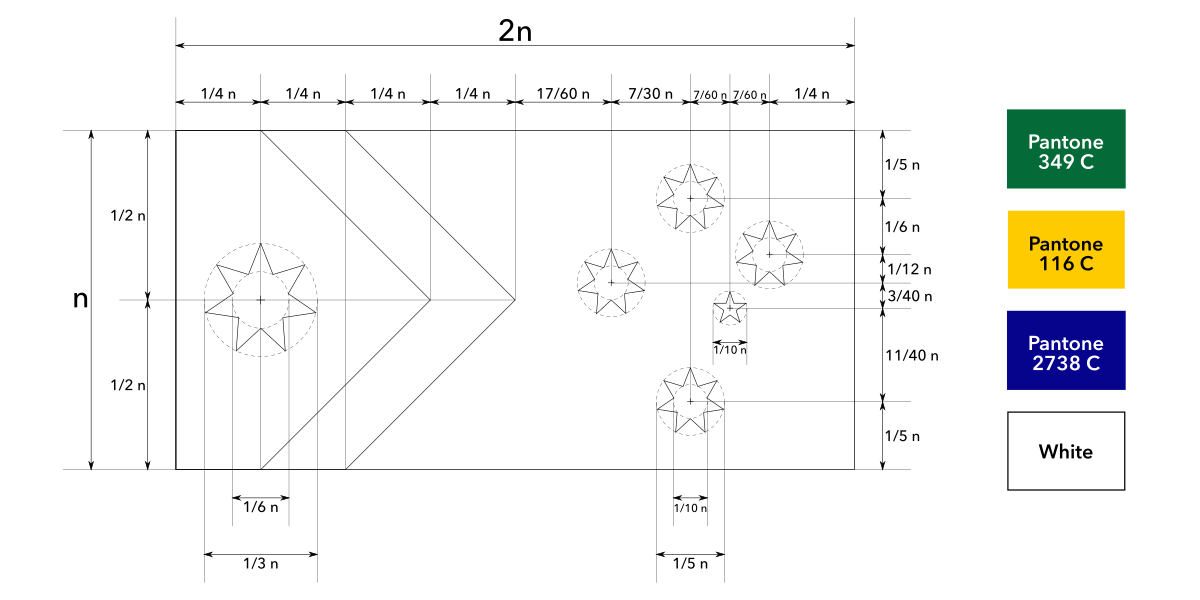
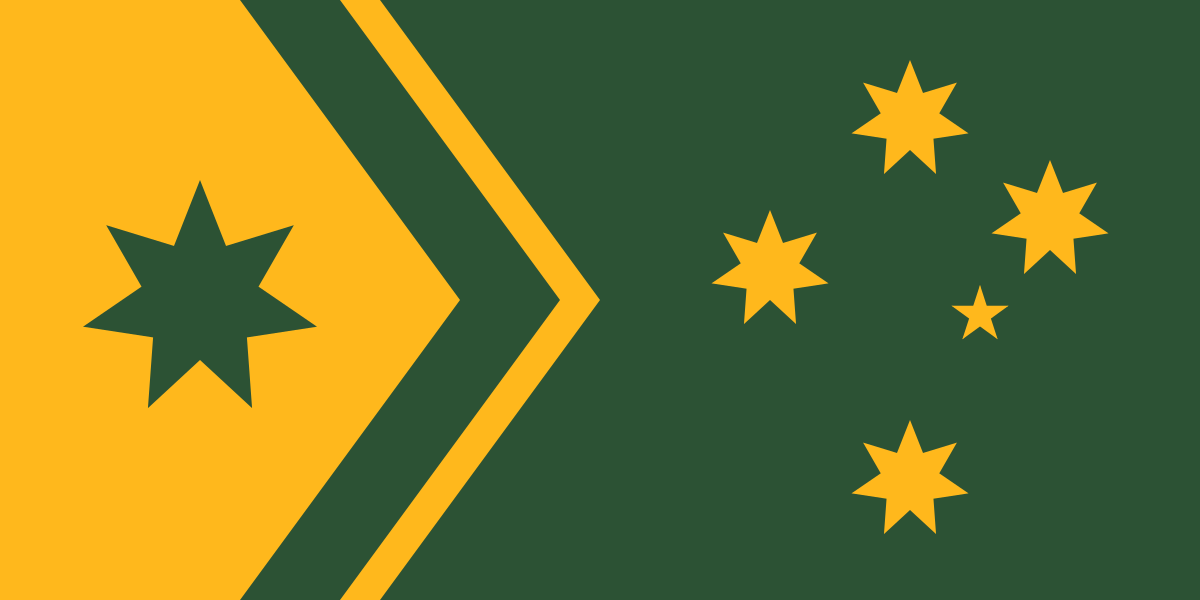
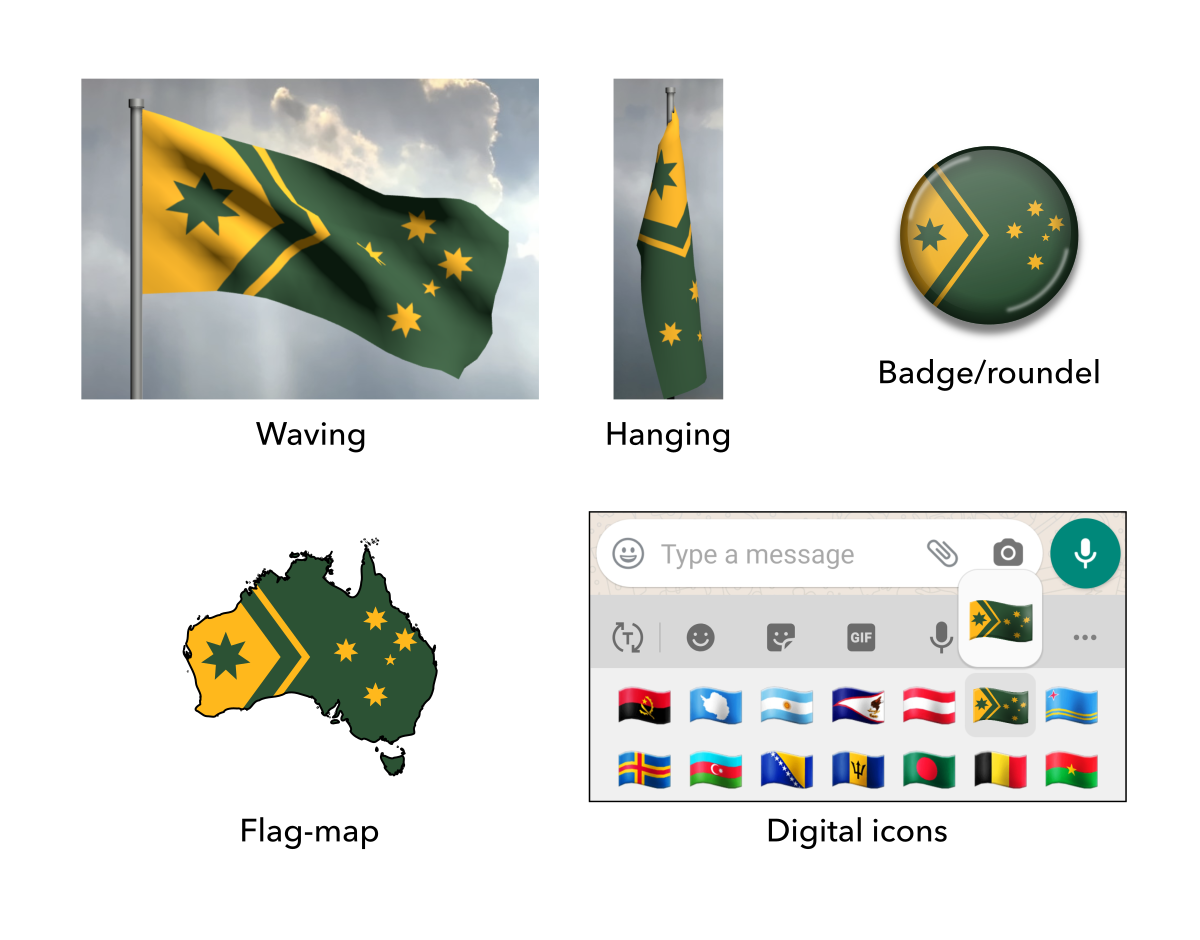
Sunlit Country is based on the same layout as the current flag, aiding recognition and establishing continuity. The hoist features a chevron representing unity and advancement, reflecting the country’s motto “Advance Australia”. It also subtly resembles a boomerang, representing the country’s milennia of indigenous history.Within the chevron is the Commonwealth Star, where the points represent the states and territories of Australia. The fly features the southern cross, representing the country’s location in the Southern Hemisphere and shared history.
Green and gold are the official national colours. Green represents the lush nature and gold represents the beaches, mineral wealth and golden wattle.
Commentary
Co-designed with Christopher Mark. From 2022 to 2026, it was on the banner of the Facebook group “Change the Aussie flag”, marking one of the top polling designs out of all Australian flag proposals.
Golden Arrow is based on the southern cross on blue field, representing the country’s location in the Southern Hemisphere and shared history. It is in the same form as the current flag to aid recognition and establish continuity.
The fly features a chevron representing unity and advancement, reflecting the country’s motto “Advance Australia”. It also subtly resembles a boomerang, representing the country’s milennia of indigenous history.
Green represents the lush nature, gold represents the beaches, mineral wealth and golden wattle, blue represents the boundless ocean and white represents peace. Green and gold are the official national colours, while the blue field is retained from the current flag.
Commentary
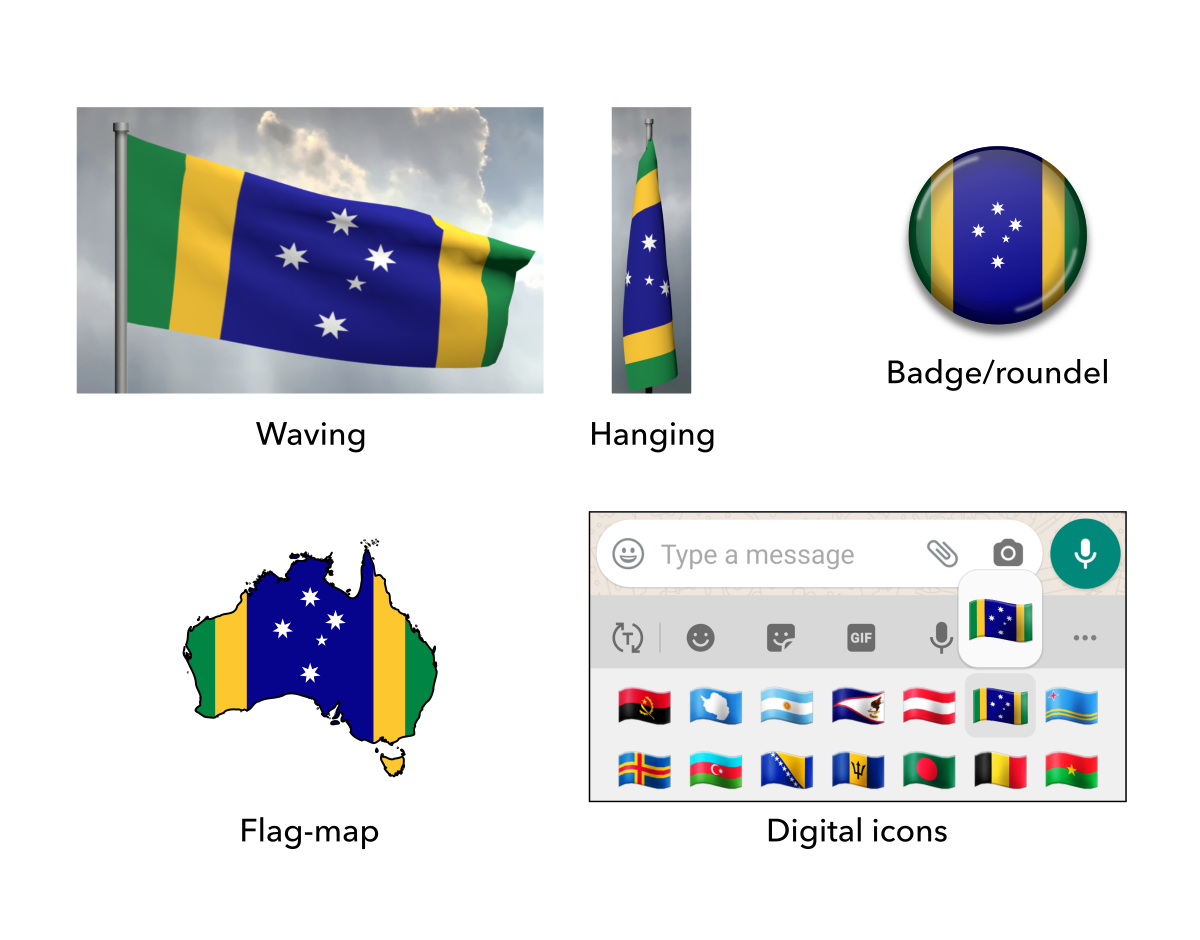
This design is a simplified version of Advance, using the Southern Cross as the main focus.
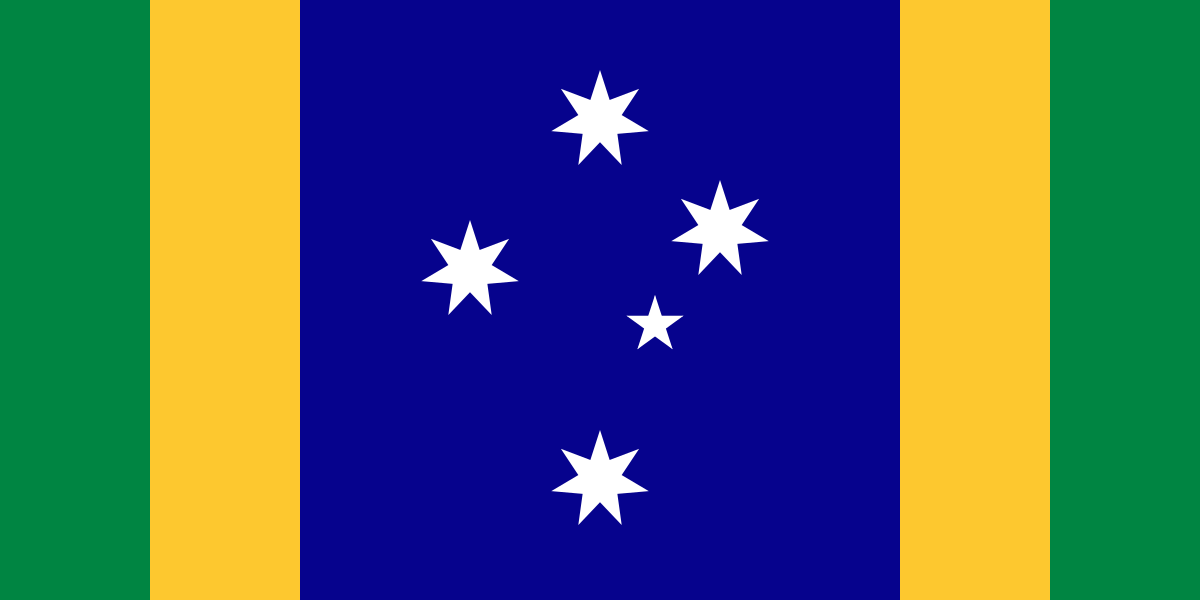
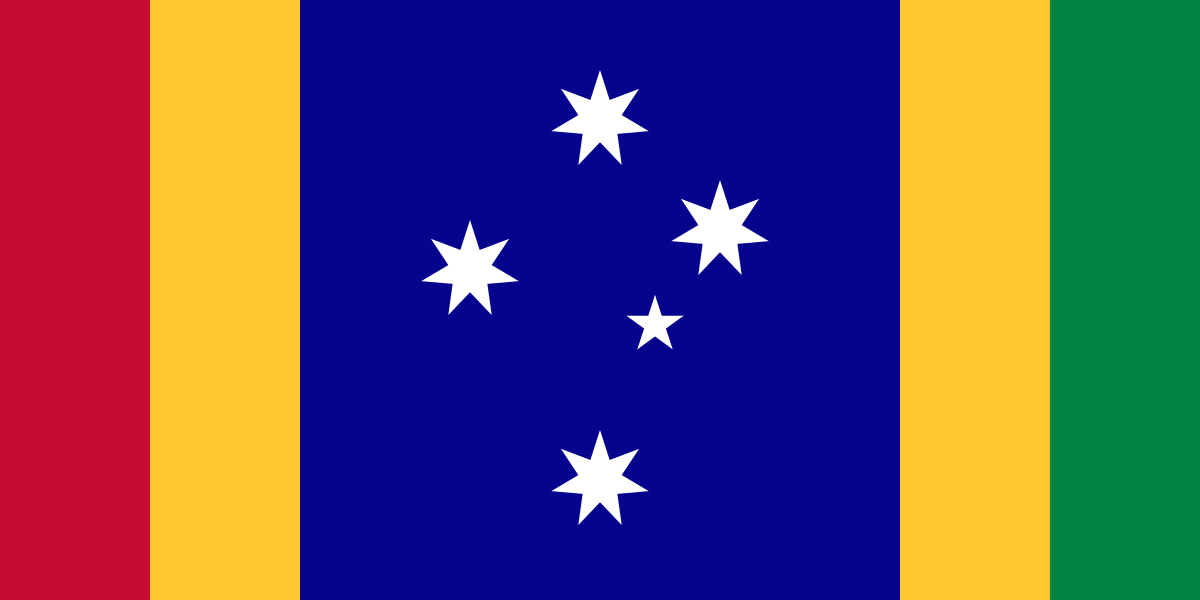
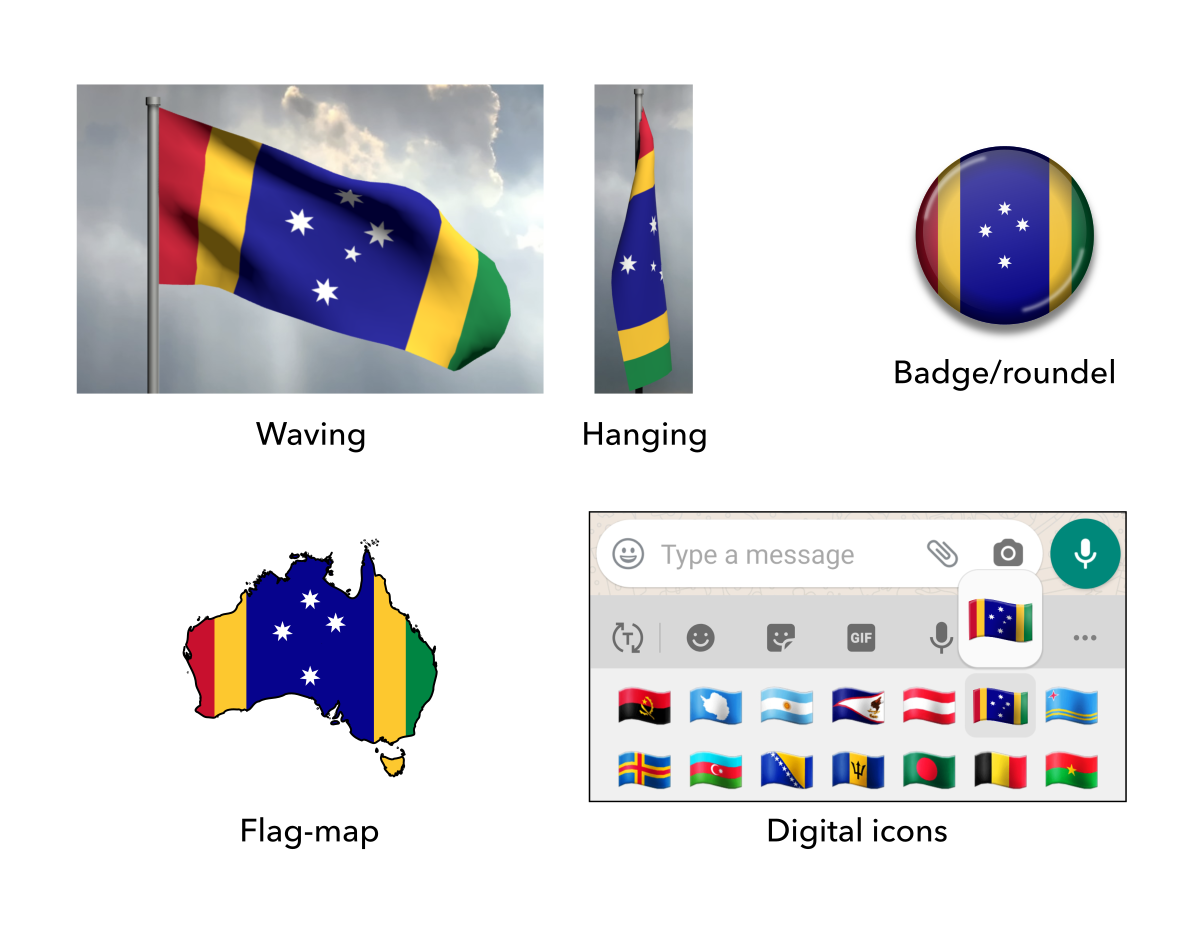
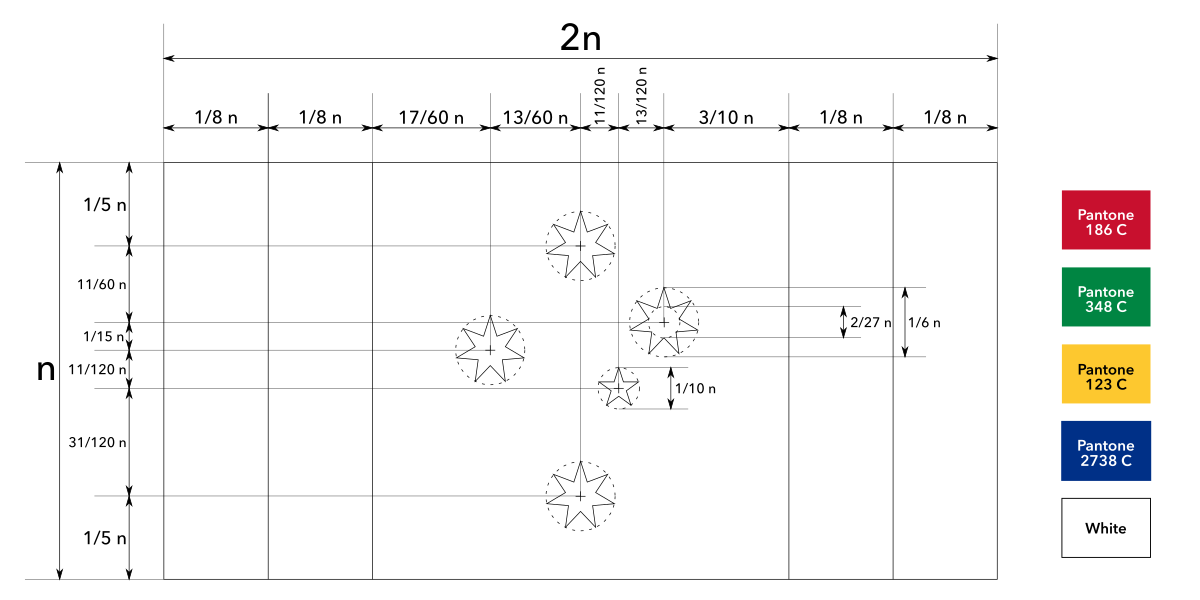
Southern Colours is based on the southern cross on blue field, representing the country’s location in the Southern Hemisphere and shared history. It is in the same form as the current flag to aid recognition and establish continuity.
The stripes on the sides represent the country’s coasts on the Indian Ocean and Pacific Ocean.
Green represents the lush nature, gold represents the beaches, mineral wealth and golden wattle, blue represents the boundless ocean and white represents peace. Green and gold are the official national colours, while the blue field is retained from the current flag.
Commentary
I designed this one with Matthew Doddrell. We both independently came up with a similar idea, and then we collaborated to make a compromise design with the best proportions and colours. He came up with the poetic name.
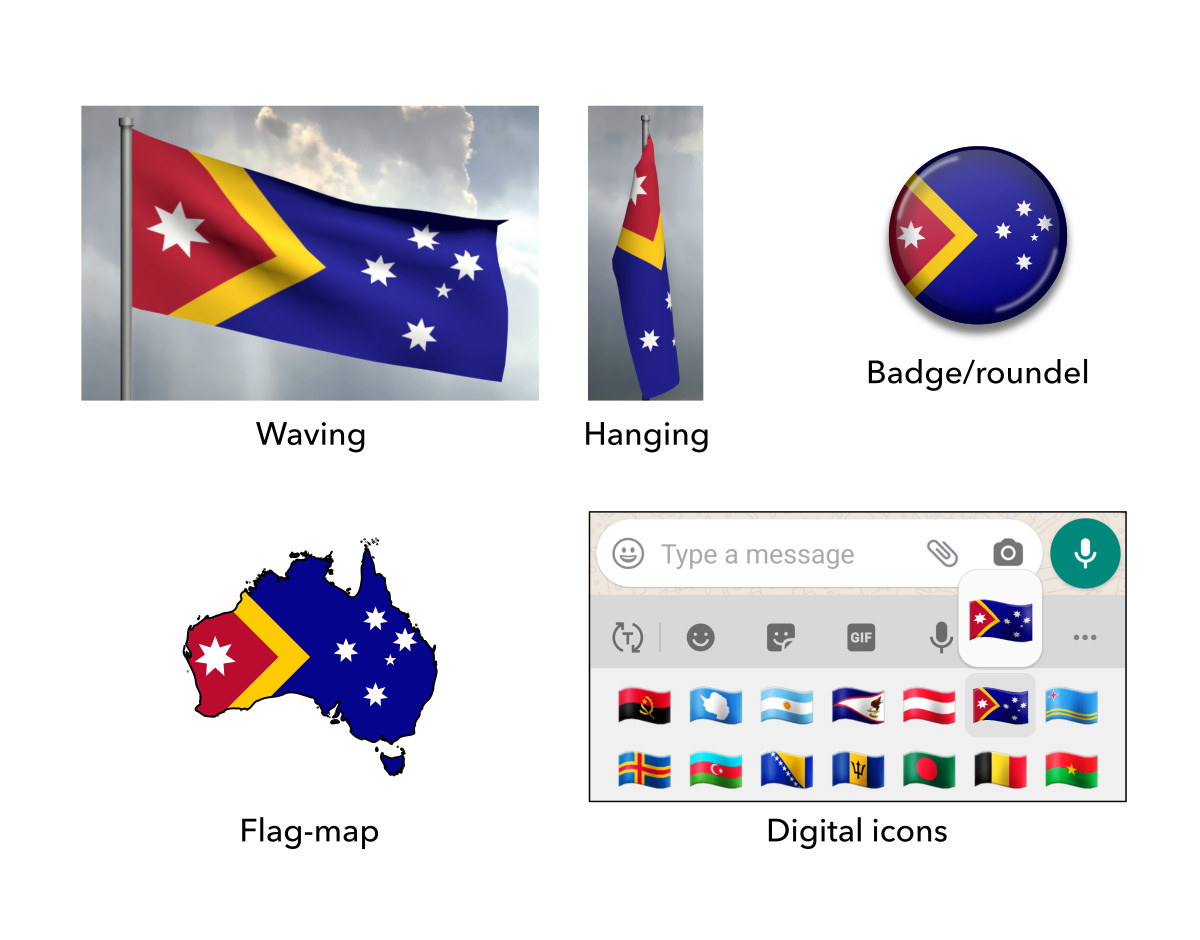
Advance (red chevron) is based on the same layout as the current flag, aiding recognition and establishing continuity. The hoist features a chevron representing unity and advancement, reflecting the country’s motto “Advance Australia”. It also subtly resembles a boomerang, representing the country’s milennia of indigenous history. Within the chevron is the Commonwealth Star, where the points represent the states and territories of Australia. The fly features the southern cross in the same form as the current flag, representing the country’s location in the Southern Hemisphere and shared history.
Red represents the land, gold represents the beaches, mineral wealth and golden wattle, blue represents the boundless ocean and white represents peace. The blue field is retained from the current flag.
Commentary
If this design seems annoyingly familiar, you are probably thinking of Captain Marvel.
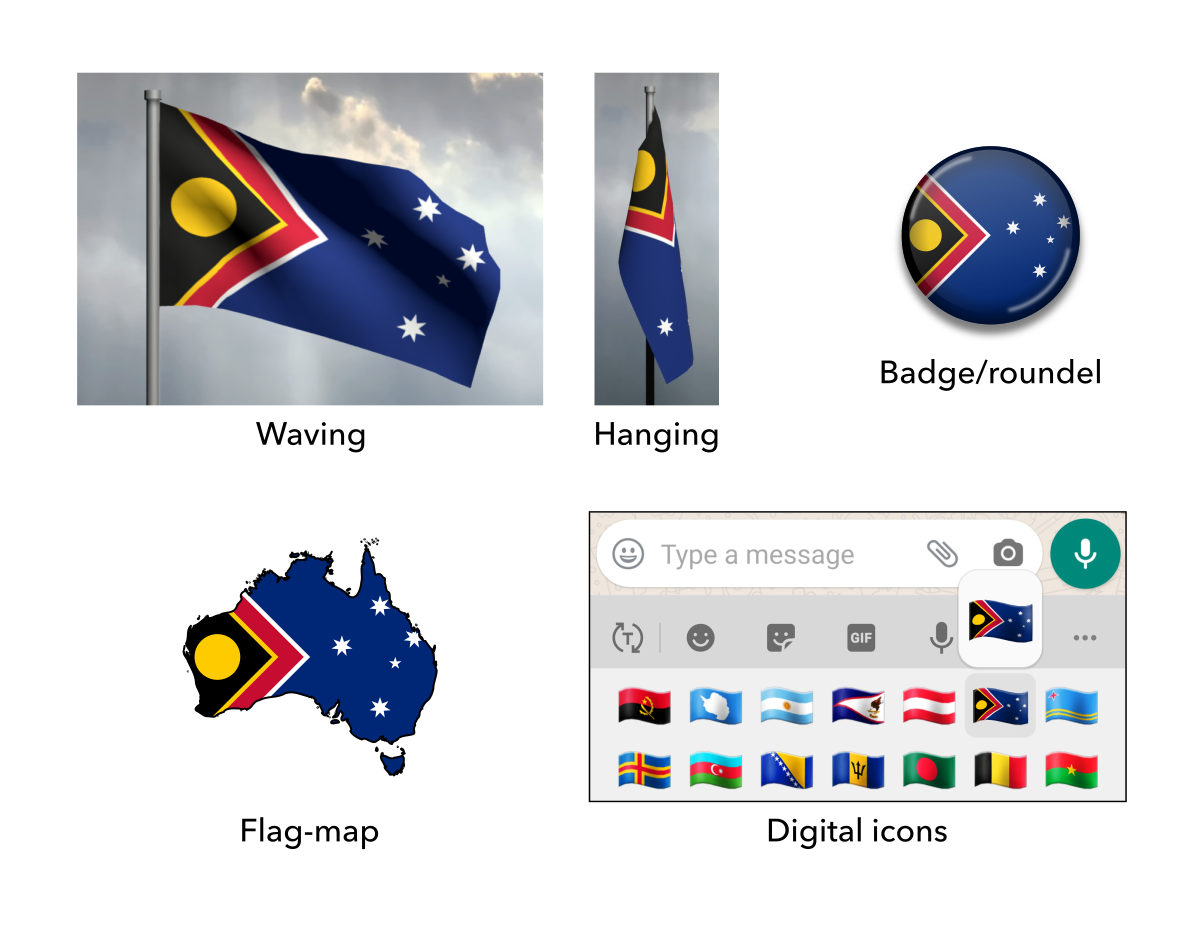
Reconciliate and Advance combines features of the Aboriginal flag and current national flag.
The hoist features the black, gold and red colour scheme from the Aboriginal flag, as well as the sun representing energy, life and the country’s climate. The fly features the red, white and blue colour scheme from the current flag, as well as the southern cross representing the country’s location in the Southern Hemisphere.
Red is at the meeting point of both parts of the flag because red is shared between both colour schemes. It takes the form of a chevron, representing unity and advancement.
Commentary
This design was the most popular on Reddit and Facebook. It was actually the precursor to Advance (above). It has more explicit Aboriginal symbolism but has more colours.
Triptych is based on the southern cross on blue field, representing the country’s location in the Southern Hemisphere and shared history. It is in the same form as the current flag to aid recognition and establish continuity.
The stripes on the sides represent the country’s coasts on the Indian Ocean and Pacific Ocean.
Red represents the land, green represents the lush flora, gold represents the beaches, mineral wealth and golden wattle, blue represents the boundless ocean and white represents peace. Green and gold are the official national colours, while the blue field is retained from the current flag.
Commentary
This design has the most colours of all my designs, but that’s deliberate.
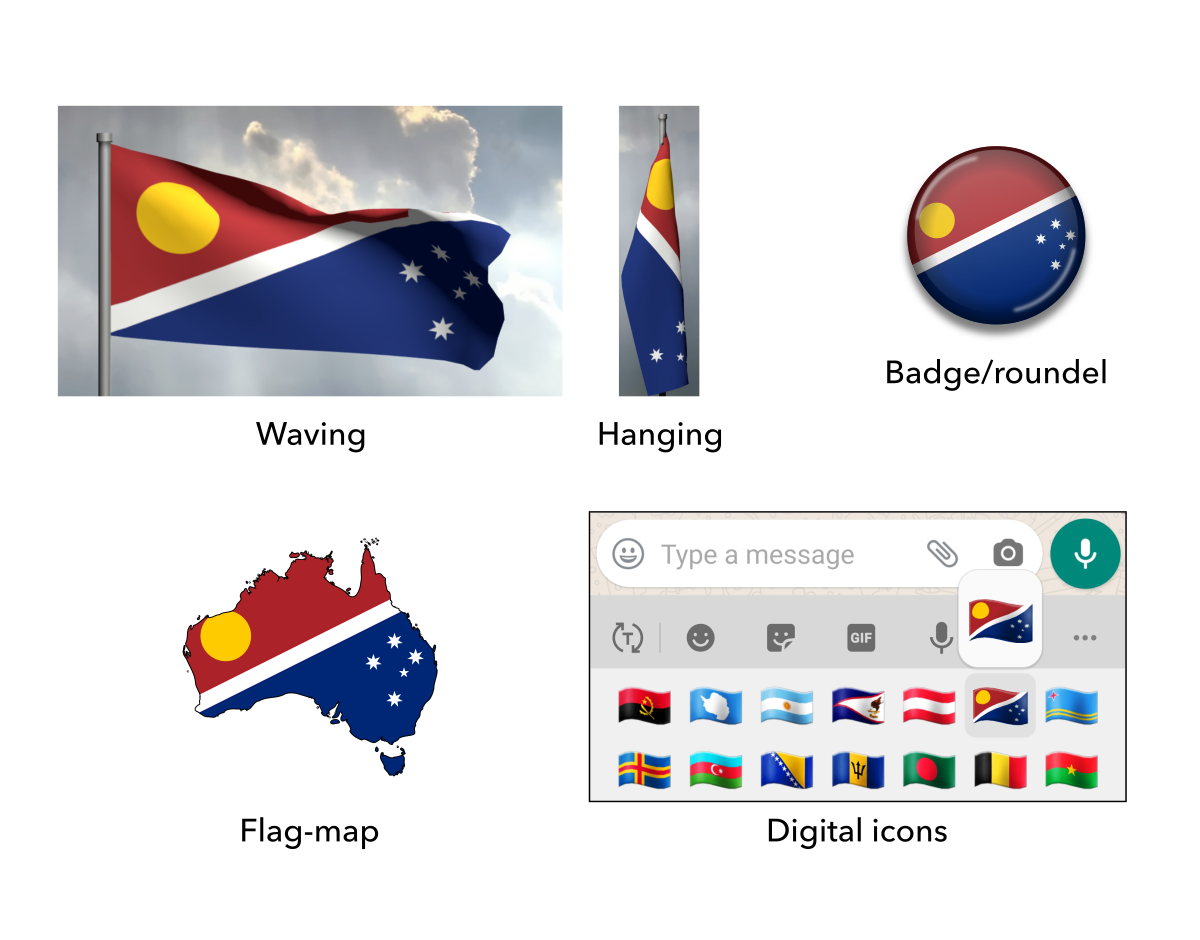
Sun and Stars combines simplified features of the Aboriginal flag and current national flag.
The hoist features the sun and red field from the Aboriginal flag, representing energy, life and the country’s climate. The fly features the the southern cross and blue field from the current flag, representing the country’s location in the Southern Hemisphere.
A white stripe is at the meeting point of both parts of the flag to represent peace between all people.
Commentary
This one is also nice and simple. However, for some, it suffers from a lack of a single focus.
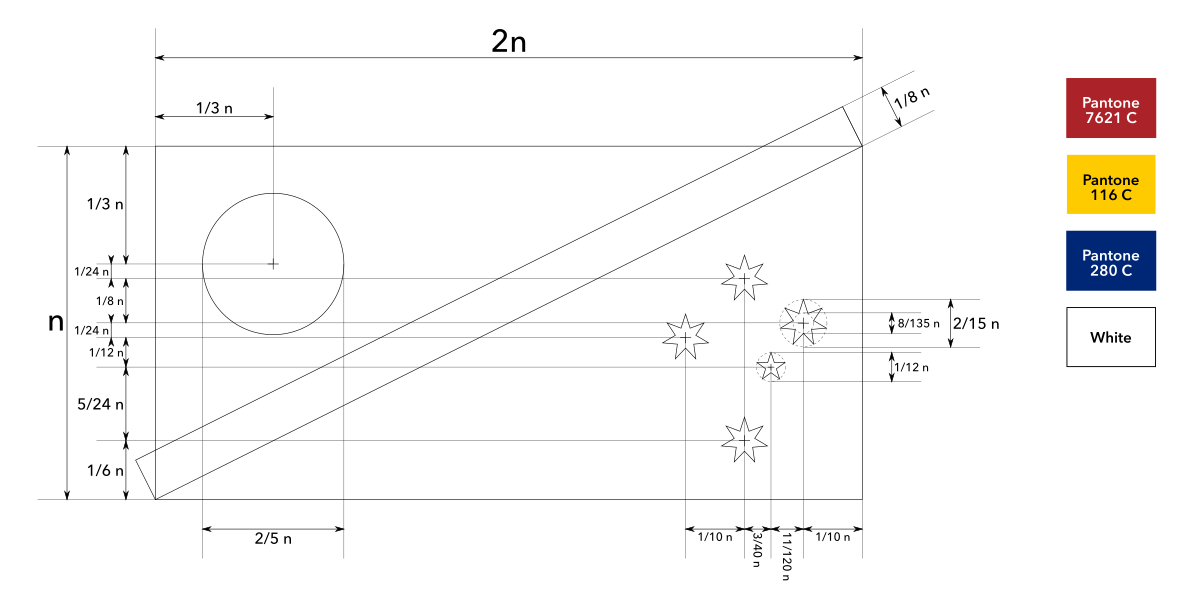
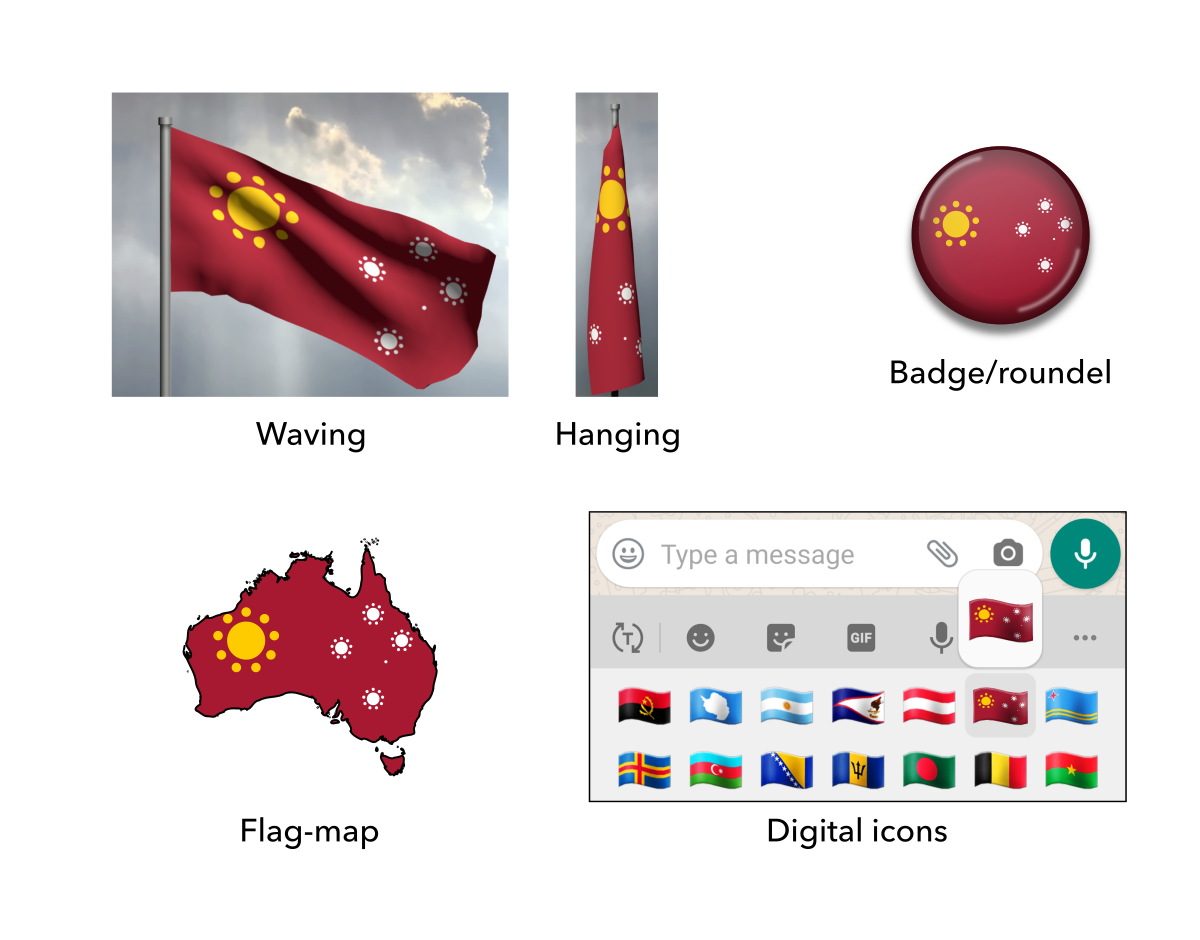
Dotted Sun and Stars portrays elements of the current national flag using stylised Aboriginal dot art.
The red field represents the land. The canton features the golden sun, representing energy, life and the country’s climate. The fly features the southern cross, representing the country’s location in the Southern Hemisphere. The nine dots around the sun and stars represent the constituent parts of Australia: Eight points for the mainland states and territories, and one last point for external territories and allies together.
Commentary
This design is the direct counterpart to my New Zealand flag proposal Flourishing Together.
This one was inspired by an Australian Aboriginal art exhibition in Vancouver. It incorporates that cultural influence without using the Aboriginal flag itself like many other concepts try to do. This one was said to be “too Aboriginal” to be accepted by Australia as a whole, which is probably true, but it looks too cool to not show it here.
Here I intended to combine the Commonwealth Star and the Aboriginal sun design in an elegant way. The current Commonwealth Star has seven points which I find to be clunky – currently, six points stand for the six original states and the seventh point stands for all territories and future states. Since this design did not need to appear conventional, I took the opportunity to update it to nine, which I feel is more appropriate and timeless: Eight points for the mainland states and territories and one point for external territories and allies. This makes more sense geographically and is future-proofed against the strong possibility of Northern Territory becoming a state.
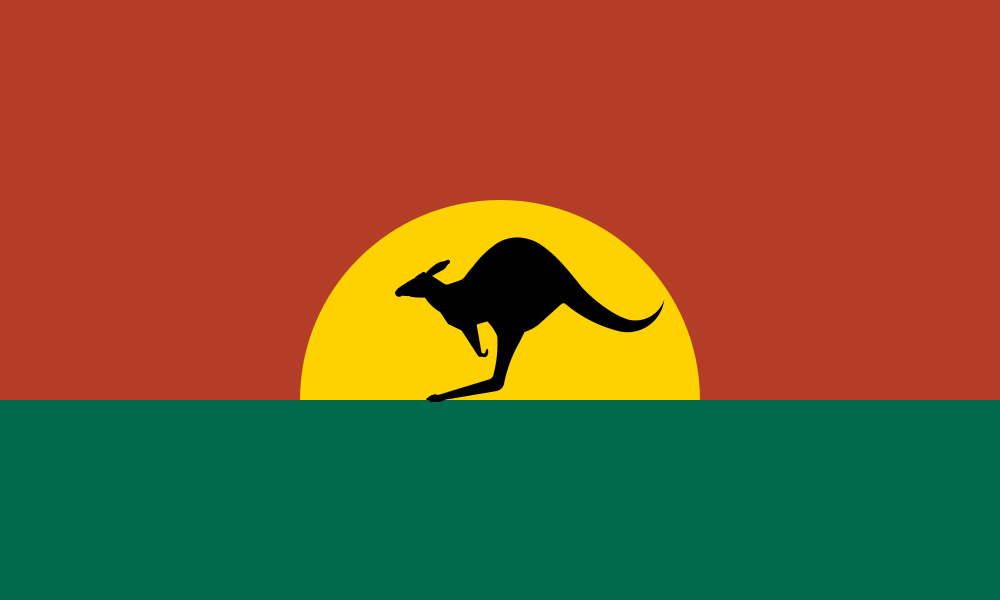
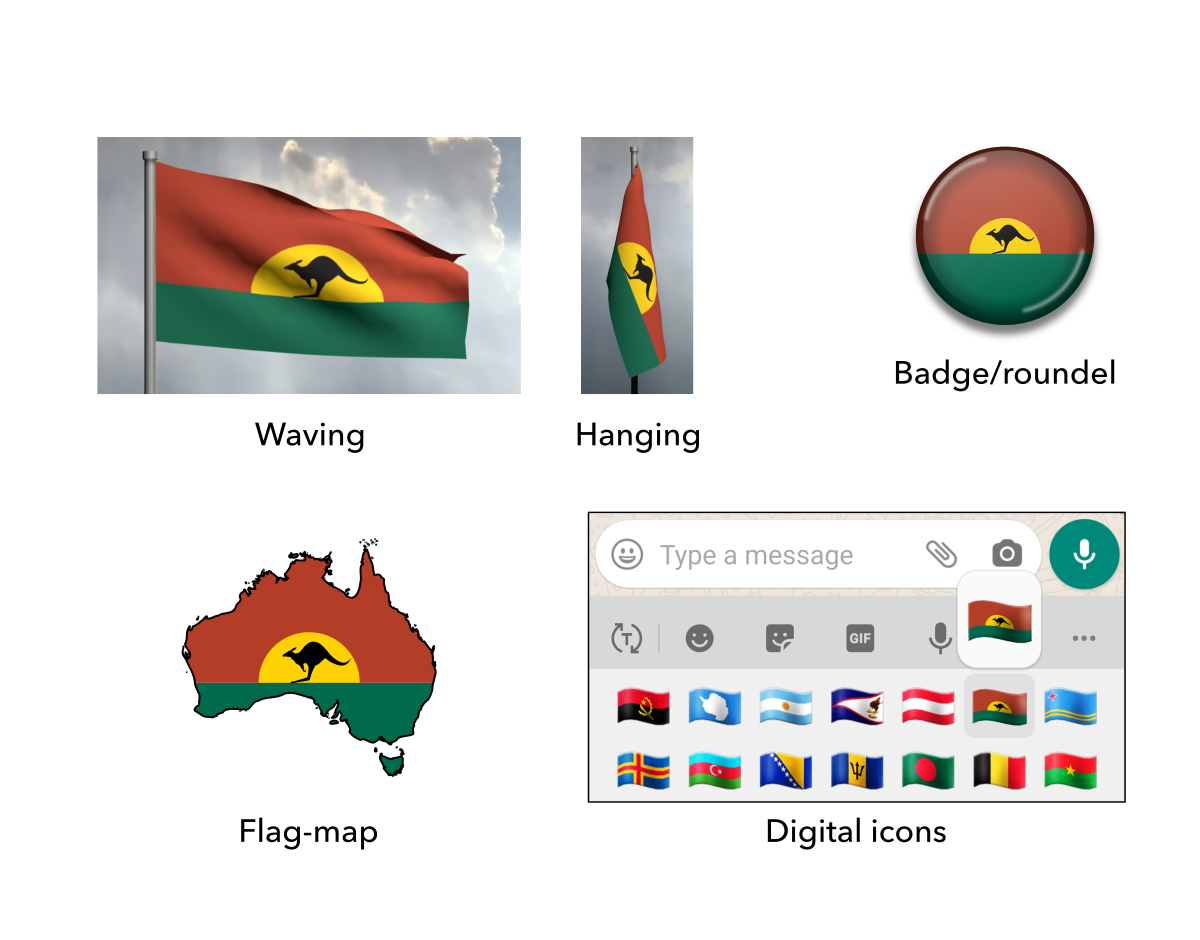
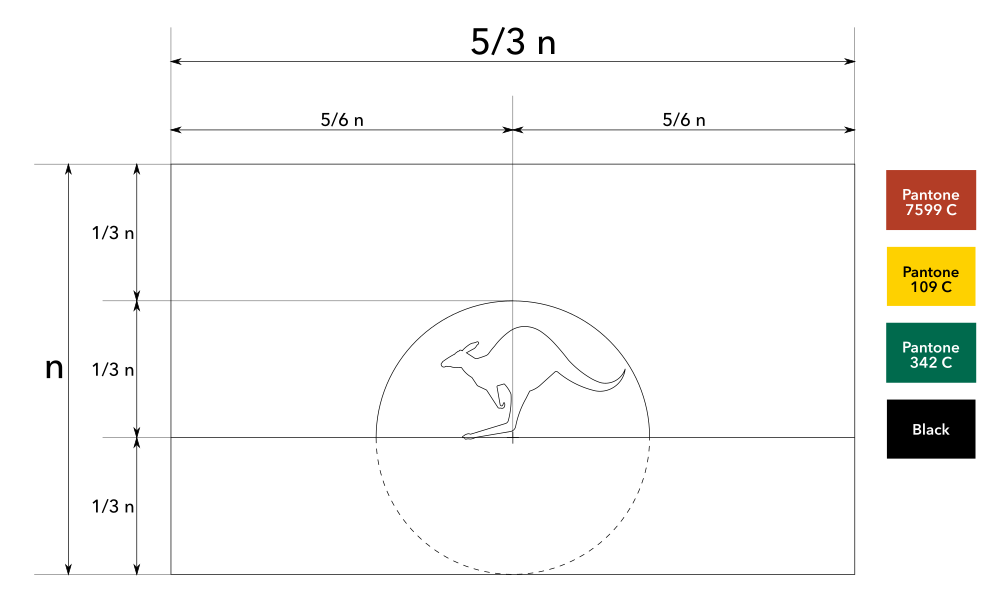
The Ancient Land eschews any symbolism from the current flag in favour of a totally unique landscape depiction. The big sunset at the top and the flat land at the bottom frame the kangaroo in the centre, a well known symbol of Australia. It includes green and gold, the official national colours.
Commentary
Although I predicted that this design would be too radical of a change, it was modestly popular on Reddit and Facebook. When designing this flag, I deliberately ignored my analysis and the symbolism on the current flag. Instead, I allowed myself to be more eccentric and boundless.
I aimed for a flag that is intuitive, timeless and naturalistic. It peels back the layers and purely captures the distilled essence of what makes the Australian continent what it is. It represents Australia in an intuitive way that just hits you at first glance even without an explanation. Even if I sent this to the distant past or distant future, it would still be totally understandable at first glance. It emphasises the natural world which is neutral and can connect with all Australians.
Also, I specifically aimed aimed to use the kangaroo in a way that feels justified and not just gratuitously slapping it inside a rectangle out of obligation like some others’ proposals do.
Unfortunately, the result falls into the “cheesy souvenir” trap by virtue of including the kangaroo, but it is unique and has its own charm.
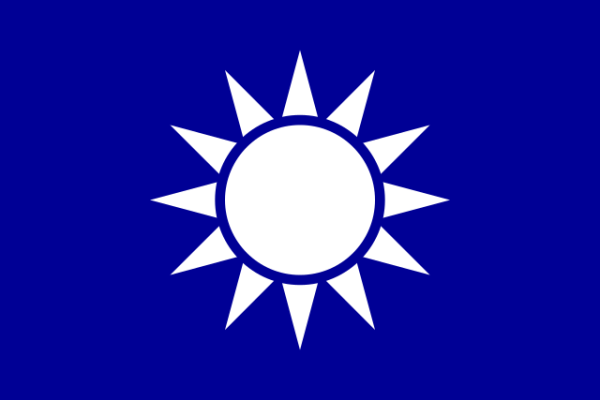
Flag of the Kuomintang (Chinese Nationalist Party) / 國民黨的旗幟
The current flag of Taiwan is a historical relic inherited from the Republic of China, which ruled mainland China over seventy years ago. Now it is confined to the island of Taiwan and the country is simply known as Taiwan to everybody. Moreover, it is based on the flag of a single political party, the Kuomintang (Chinese Nationalist Party). This may have made sense when Taiwan was a one-party state, but not when Taiwan is now a multi-party democracy in which the Kuomintang is just one of many political parties.
In recent years, Taiwan has shifted towards a strong, local, independent identity, especially the younger generations. For example, a poll by National Chengchi University shows that the majority of the population now identify as “Taiwanese” rather than “Chinese”, and this is constantly rising. Also, in July 2020, the Taiwanese passport was officially redesigned to emphasise the name “Taiwan” instead of “Republic of China”. There have been many such changes from the 2000s onwards.
In light of these developments and more, some have called for a flag for the island of Taiwan itself and some have even proposed designs. However, those designs have significant flaws and none are popular. Therefore, here is my proposal.
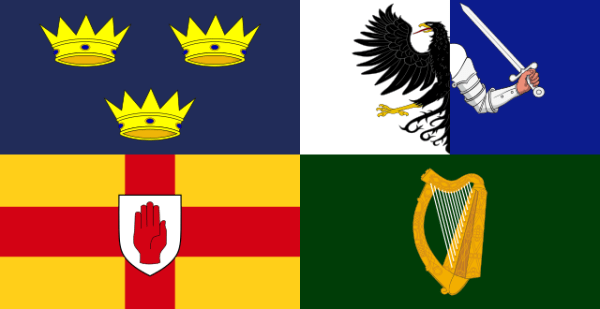
The island of Ireland is currently split between the Republic of Ireland in the south and Northern Ireland (part of the United Kingdom) in the north. Each side has their own flag, but there is no single neutral design to represent the whole of Ireland. This is a problem when there are many all-Ireland organisations and sporting-teams. Many of these compete internationally but cannot use an official neutral all-Ireland flag because no such design exists. Instead, each one uses their own ad hoc compromise design. A well-known example is the Four Provinces flag (displayed above) that just combines the individual flags of each of Ireland’s four provinces so as to represent the entire island in a disunited, clumsy and complex way.
Compare this situation with the Korean peninsula: Although it is split between North Korea and South Korea, there is a single neutral official flag to represent the whole of Korea for joint organisations and sporting teams.
Also, the future possibility of Irish unification is becoming more and more plausible. If this possibility escalates into a real scenario, the island will require an acceptable symbol that is neutral and not associated with only one side. Polls show that creating a new flag in the event of Irish reunification is the most popular option among both the public and politicians.
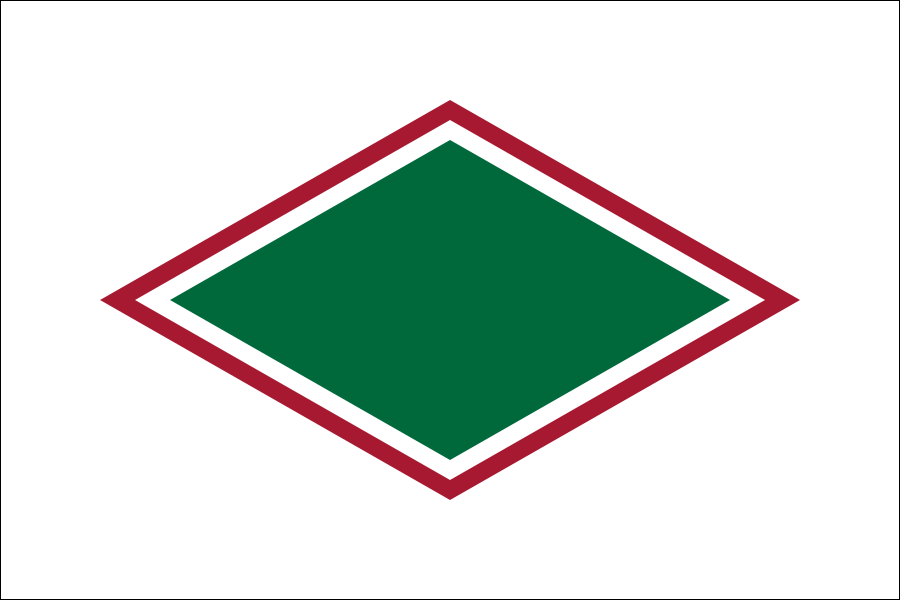
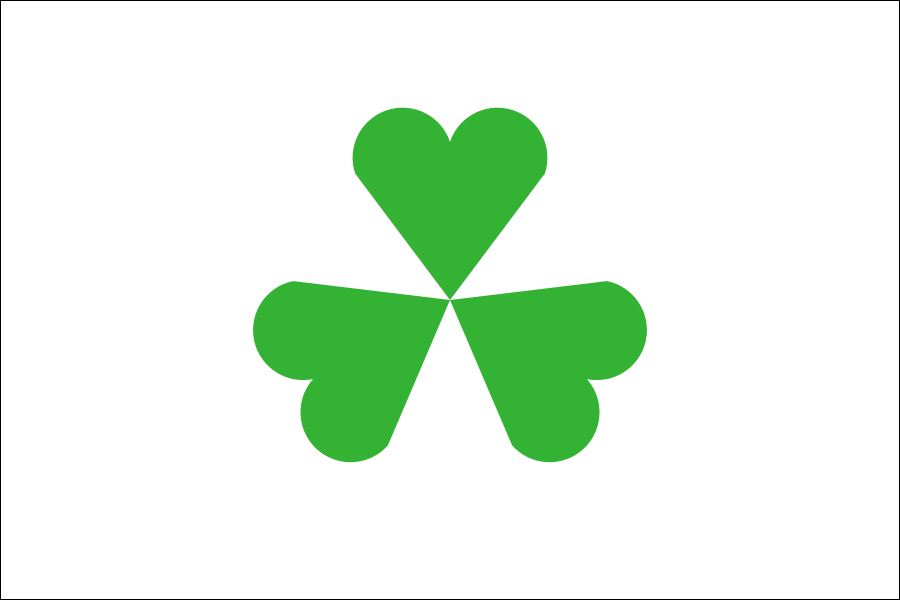
Therefore, here is my proposal.
Note: My choice of designs do not reflect my political opinions.
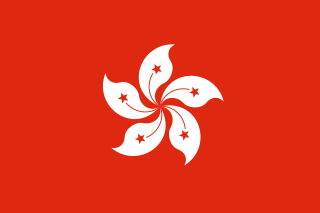
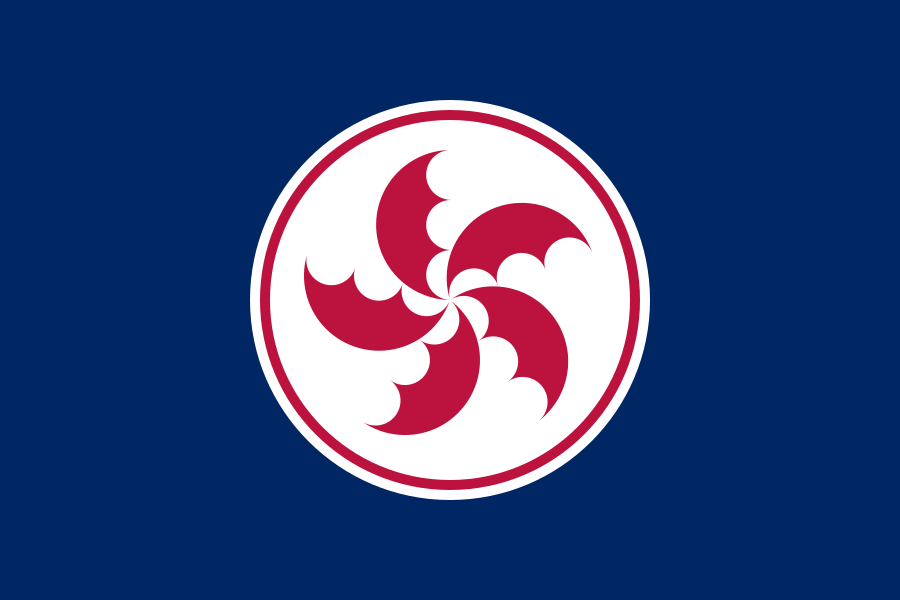
The current flag of Hong Kong SAR (Special Administrative Region of China) consists of a bauhinia flower and five stars on a red field. Although this design was created by a local and contains a native flower, it was adopted under strict oversight by the Chinese government. The dominance of the colour red and the five stars, all borrowed from the Chinese flag, are a result of this. The relationship between Hong Kong and the People’s Republic of China has come under growing scrutiny, so many Hongkongers feel that their flag reminds them more of China’s power than Hong Kong’s identity and no longer represents them. Therefore, here is my proposal.
With updated Job’s Voynichese and OCR project, I thought a good place to start is an informal review of the digital transcription file of the Voynich Manuscript. I am referring to Stolfi’s “Interlinear” txt file from 5 December 1998 based on work by Landini, Grove, Friedman, Takahashi, D’Imperio, Currier, Reeds, Guillogly and Guy. It’s what everyone uses, including academic researchers. The quality of any statistical investigation rests on the quality of the transcription, which I think can be improved.










 Proposed Flags of Aotearoa New Zealand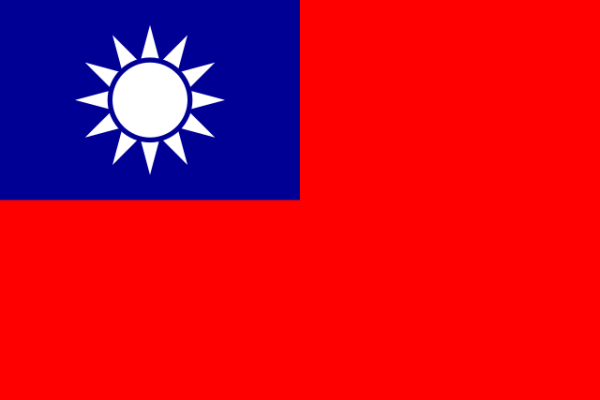
 Brian Cham's personal website